
Mon–Fri: 7 AM–9 PM, Sat–Sun: 6 AM–9 PM(775) 227-5588
J&K Carson City Spray Foam InsulationJ&K Carson City Spray Foam Insulation

Blown-in insulation in Carson City NV - an attic covered evenly, wall to wall

Hot upstairs in summer, drafty in winter? We seal the gaps, then blow loose fill to an even depth across the whole attic floor.

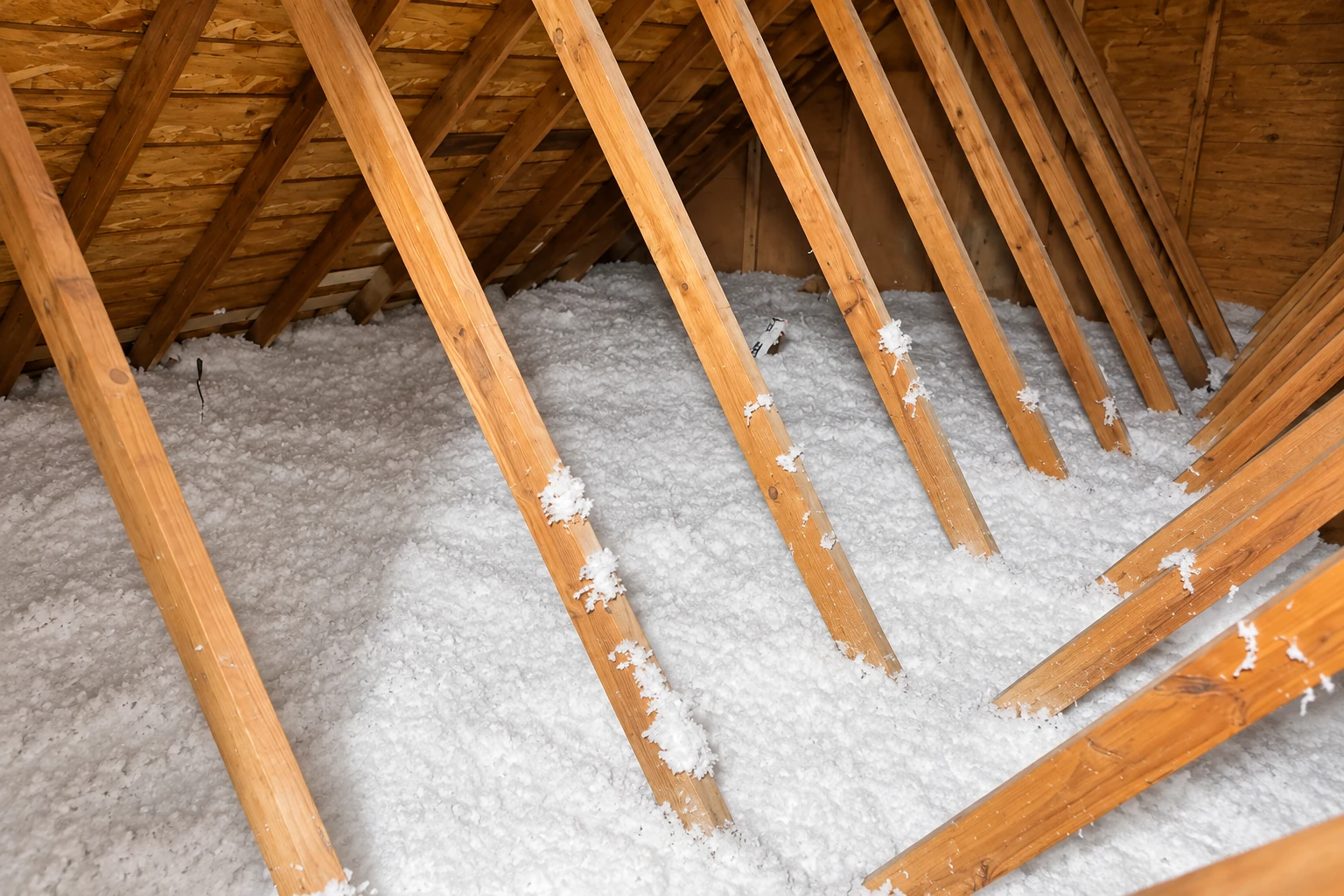
Attic floor covered in loose white blown-in insulation between exposed wooden roof trusses.

Is blown-in insulation the right fix for my Carson City attic?

Blown-in insulation is loose fiberglass, rock wool or cellulose that we blow through a hose across your attic floor, so it fills in around joists and wires and covers the whole ceiling out to where the walls meet the attic. For a Carson City house that's hot upstairs or hard on the power bill, it's usually the simplest way to bring a thin attic back up to where it should be.

Most calls start with a room that won't stay comfortable or a bill that keeps climbing, and when I get up there I usually find a few inches of old fill packed down over the years, with air slipping through gaps around lights, pipes and the hatch. The price moves with the size of the attic, how much is already up there, whether any of it has to come out first, how many gaps need sealing and how easy the hatch is to work through. The schedule turns on those same things, plus checking the permit rules for your address. At the estimate I go over what I found with you, so the number you get comes from your attic and not a guess.

Since our name says spray foam, you might expect me to push it. Foam costs more and seals air while it insulates, but for most attics, sealing the gaps and topping up with loose fill does the job for less, and I'd only point you toward foam if your ductwork runs through the attic.

What happens when you call about blown-in insulation in Carson City?

You call or send a request, we set up a visit, and from there you'll know who's in your attic and why at every step.

I look at the attic with you

I do the estimate visits myself, flashlight and tape measure in hand, which beats the desk job I used to have by a mile. I check how many inches are already up there, the hatch, the lights and the eave vents, and I tell you what I see before I put an estimate together.

A lead installer runs your job

Our installers do the work, with a lead installer running each job, so there's one person on site who knows your attic plan start to finish. We've been in business since 2017, and I learned the trade on an insulation crew around Carson City before that.

Licensed, insured and cleaned up after

We're fully licensed and insured. If you go ahead, we prep the space, do the work, clean up after ourselves and I walk you through the finished job, because your satisfaction, guaranteed, is how we close out every attic.

How we do blown-in insulation, start to finish

We start with baffles at the eaves, the low edges of the roof, so the attic keeps breathing and the new fill can't spill down and bury the vents. Then we block around chimneys and flues and keep material off recessed lights that aren't IC-rated, meaning built for insulation to touch them, which is how the cellulose makers say it's done. After that we blow. What I watch most is getting enough material in and keeping the depth even across the whole floor, edges included, because fluffed-up loose fill settles and stops doing its job, so we blow to the insulation maker's recommended density instead of to a nice-looking pile in the middle.

Sometimes the old fill has to go before anything new goes in. If it's been soaked or it's full of droppings, blowing over it just buries the problem, so we'd talk about insulation removal first. And if the attic is only part of why the house feels drafty, we can look at walls, floors and the crawl space as part of home insulation.

  • Measure what's already up there and check it for moisture, droppings or vermiculite
  • Seal the gaps around lights, pipes, wires and the attic hatch
  • Set baffles at the eaves and block around chimneys and flues
  • Blow loose fill to the maker's recommended density, edge to edge
  • Haul out the mess and leave the hatch closed up tight

How the day goes on your side of the hatch

Blowing an attic is mostly overhead work, but a few things happen down in the house too, so here's what to expect.

  1. Clear a path to the hatch

    Move what you can from under the attic hatch, whether it's in a hallway, a closet or the garage, so the crew isn't working over your things. If something can't move, just tell us and we'll work around it.

  2. Cover the route in and out

    We lay drop cloths from the door to the hatch and keep the hose run tidy, because loose fill finds its way everywhere if you let it.

  3. Mark the depth before we fill

    The lead installer sets depth markers across the attic floor, out near the edges as well as in the middle, so the crew can see the depth stays even as they go. Thin edges and a deep middle is backward, and the markers keep that from happening.

  4. Leave the markers in place

    The depth markers stay up there when we're done, so you or anyone who checks the attic later can see how deep the fill went without digging into it.

Get a free on-site look at your attic

Fill out the form or call (775) 227-5588, and we'll get back to you within one business day, most of the time with me on the phone. I'll set up a free visit, look over your attic with you and put together an estimate with no obligation. It helps if you jot down where your hatch is, whether you think there's old vermiculite up there and whether you have recessed lights in the top-floor ceilings.

(775) 227-5588

Blown-in insulation questions from Carson City homeowners

Is blown-in insulation cheaper than batts for an attic?

Usually, yes. Blowing loose fill across an attic floor generally costs less than laying batts, the precut blankets, and it covers better because it fills in around joists, wires and odd corners. Install costs still vary from house to house, which is why I price yours after I've seen the attic.

What should happen before new attic insulation goes in?

The gaps should be sealed first. Air leaking through holes in the ceiling around lights, pipes, wires and the hatch can waste the money you spend on insulation, so we do air sealing, closing those gaps, as the first step and blow the fill after.

What if my attic has old vermiculite insulation?

Leave it alone and tell us before anyone goes up there. Vermiculite, the pebbly gray-brown fill some older attics have, may contain asbestos, so it stays undisturbed. Mention it when you call or at the first visit, so we can plan around it before any attic work starts.

Do blown-in insulation jobs in Carson City go through the city's permit portal?

Carson City's Building Division takes documents through its portal for new homes, changes to existing homes and commercial construction, and whether your attic job falls under that is something we check with the office that covers your address before we start. The rules differ between Carson City, the counties and the cities around us, so we don't assume. If your job needs a permit, we take care of the paperwork with them.

Blown-in insulation in Carson City and the cities around it

Nevada sets a statewide energy code, and local governments can adopt stricter rules of their own, so what's expected in a Carson City attic may not match Reno or Gardnerville exactly. Around here we see plenty of older houses with a few inches of packed-down fill and newer ones where the edges were left thin, and either way we check the rules for your address before we plan the job.

If you'd rather do the work yourself on the house you live in, Nevada's contractor law exempts an owner improving their own home for their own use, though not one they plan to sell or rent out, and you apply for that exemption with the Nevada State Contractors Board. If you'd rather hand it off, we're based in Carson City and work across the cities around it, from Reno and Sparks down to Gardnerville and up to Incline Village, plus plenty of places in between.

Find out what's in your attic first

Knowing how many inches you already have is what settles whether you need a top-up at all, so call (775) 227-5588 or send the form.

If you've got a question about your attic before you're ready to book, give us a call and I'll talk it through with you.

Tell us about your project
(775) 227-5588Get an estimate